

Advanced Imaging synthesizes expert knowledge, high-end equipment, and artistic skill
Capturing irreplaceable evidence before it is altered
Unlock the power of visual storytelling with Advanced Imaging, the premier imaging-as-a-service solution designed to elevate your photography experience beyond the ordinary. Our state-of-the-art technology provides high-resolution stills and videography, utilizing specialized lenses to capture every detail with stunning clarity.
Whether you need slow-motion or high-speed capture, Advanced Imaging thrives in constrained or challenging environments, ensuring no moment goes unnoticed. With RTI’s extensive expertise in forensic and technical imaging, we specialize in site and evidence inspections, precise patent-related work matching perspective to 2D drawings, and color-accurate product documentation.
Ideal for laboratory contexts, our service excels in delivering high-detail results during one-time, time-limited inspections under unknown conditions. Choose Advanced Imaging for unmatched quality and reliability in your imaging projects. Experience the difference today!
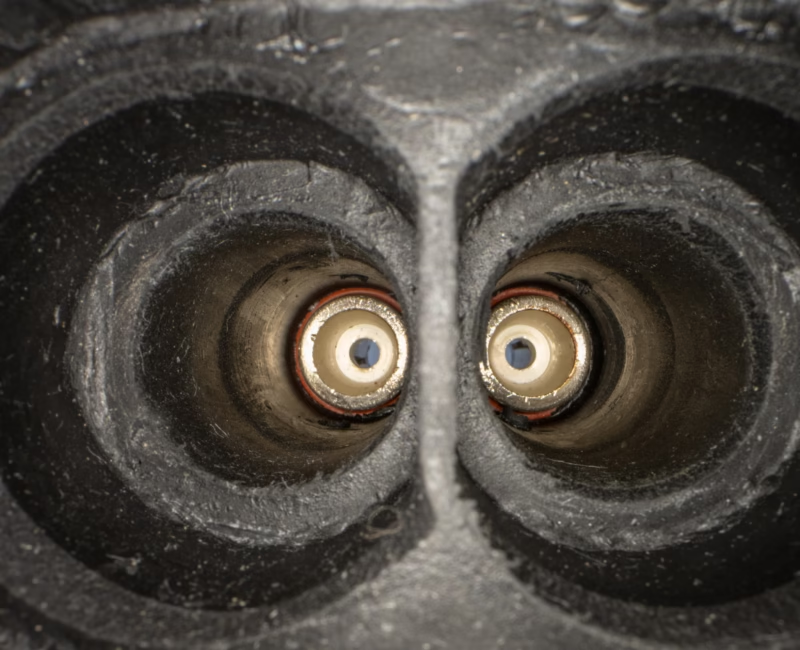
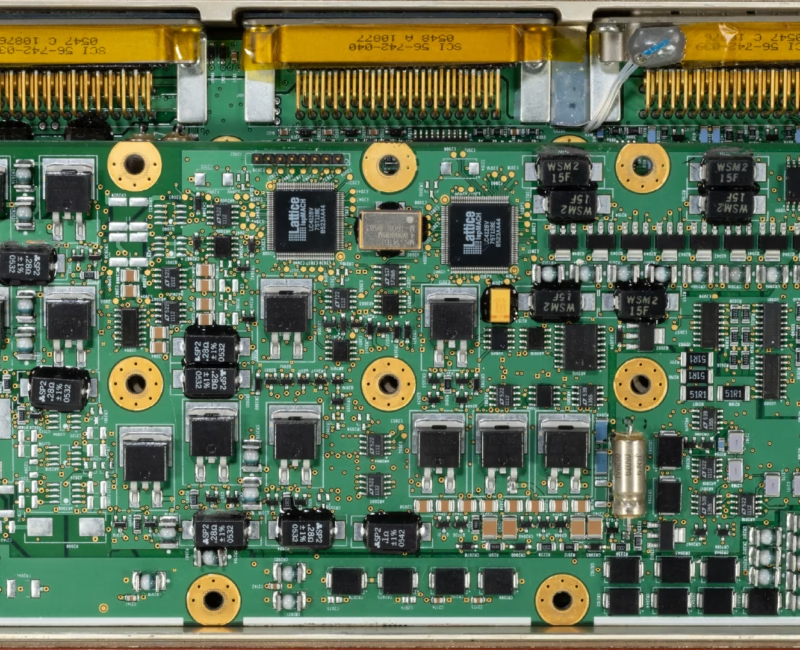
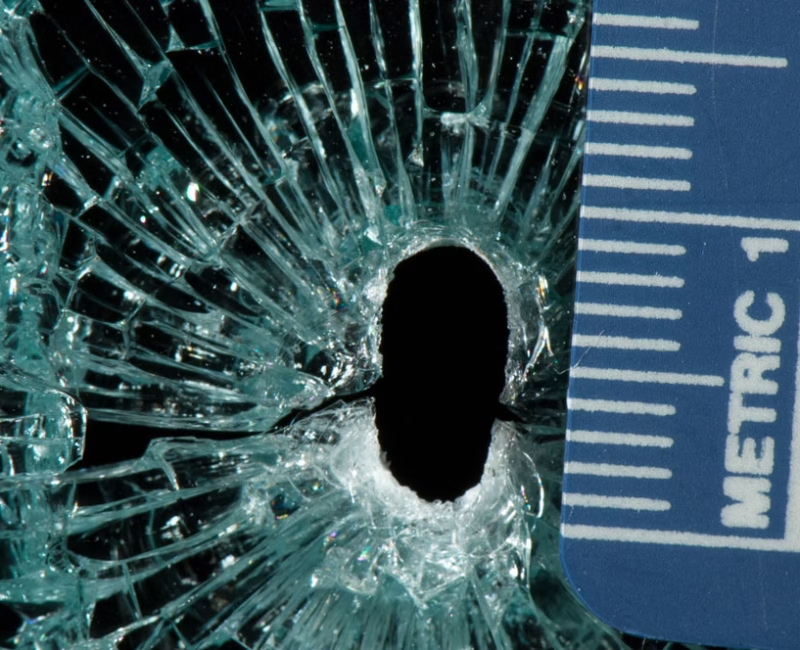
High-resolution images serve as analytical tools, revealing information invisible to the naked eye.
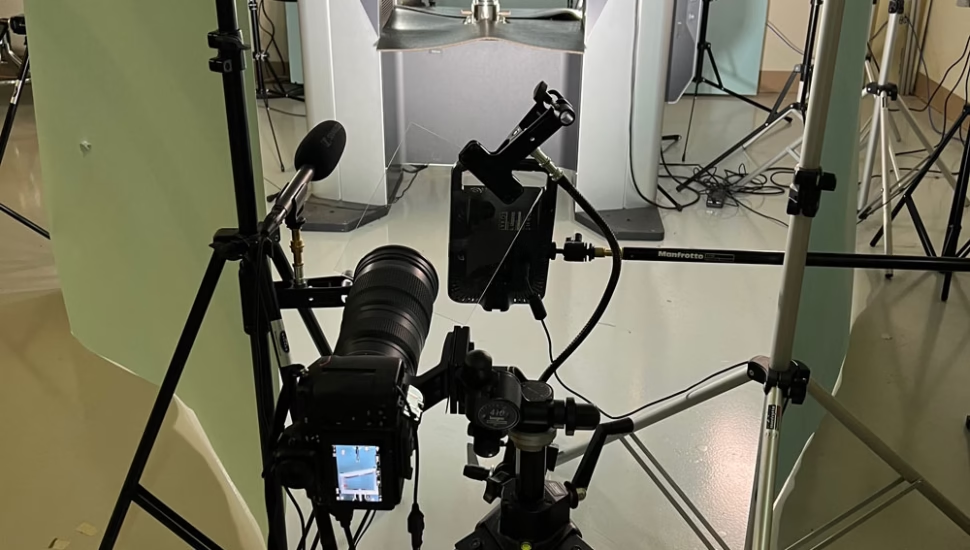
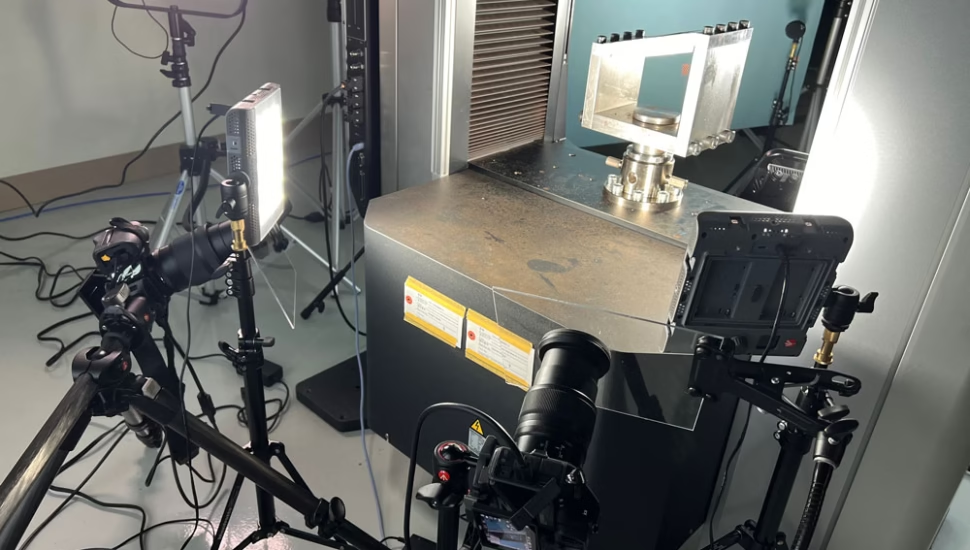
Three synced cameras recording video are used to show different angles during the testing of all thread rod. The images above show the camera setup that was used to capture the test.
Capturing high-quality, analysis-ready imagery in one-time, time-limited inspections with unknown conditions requires rapid adaptation, specialized equipment, and expert judgment. This directly impacts evidence reliability and downstream analysis in forensic and technical cases.
The current approach uses professional mirrorless cameras, interchangeable
lenses (wide, telephoto, macro), high-resolution sensors, and a systematic
(wide-to-detail) process with on-site problem-solving for lighting and access constraints.
Scenarios often allow only one opportunity to document evidence prior to destructive work. Examples include tight spaces (inside a aircraft compartments), challenging lighting, and constrained angles requiring special tools. Context: inspections are unpredictable; equipment is
complex and must be operated quickly without fumbling. Stakeholders: field
imaging specialists, litigation/forensic clients, and expert teams relying on
imagery for reports.
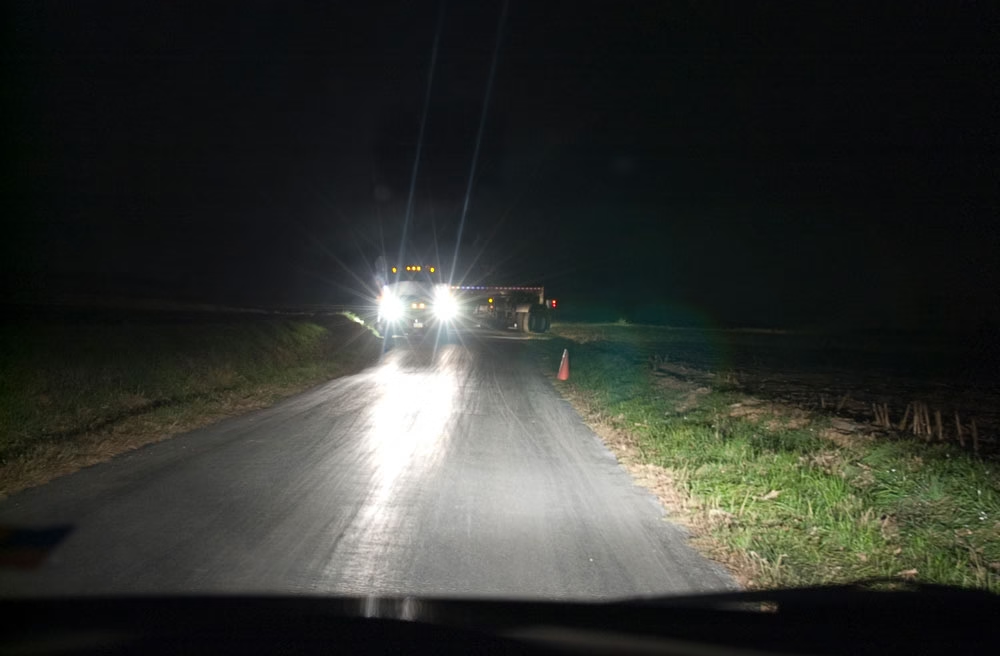
This image was produced to show what the driver of a vehicle would have seen while driving down a rural road at night. Careful consideration was used to determine the correct lens to replicate the angle of view by the average human. To preserve as much detail as possible including overall dynamic range, the original image was taken as a RAW file (unprocessed, high-detail image often called a digital negative).
Patent-related imaging demands precise perspective control and color accuracy to match 2D drawings and present products accurately, which is technically demanding and time-consuming. Falling short can undermine patent documentation, comparisons, and litigation exhibits.

Based on patent drawings this image was taken at the same angle of view to show the detail of the manufactured product.
Recording legacy CRT monitors presents significant flicker (interlacing due to RGB scan speed) and visibility issues because these systems cannot export visuals and must be captured optically. This affects projects involving software demonstrations on older hardware and can jeopardize the ability to show how software functions. The current approach uses multiple cameras, syncing them, and techniques to minimize flicker and capture legible screens. Quantitative metrics include multiple screens and cameras that must be synced.